DoangJoo "Alan" Synn

PhD Candidate in Computer Science · School of Interactive Computing, Georgia Tech

Advised by Prof. HyunJoo Oh & Prof. Sehoon Ha

I study motion as a computational medium across HCI and computer graphics. My research builds systems for designing, generating, and fabricating motion. I aim to make motion programmable and tangible across animated characters, mechanical artifacts, robotic systems, and AI-assisted creative tools.

Before starting my Ph.D., I spent eight years building software systems across AI systems, games, cloud platforms, and social robots.

Portrait of DoangJoo "Alan" Synn

News

  • Jun 2026

    Hosting Georgia Tech GIFT (CEISMC) teachers this summer, exploring MotionSmith through the Motion, Making & Mechanical Design GIFT Workshop (June–August).

  • May 2026

    Invited panelist at AutomataCon 2026 (Morris Museum, NJ), where I demoed MotionSmith.

  • Apr 2026

    Passed my Graphics qualifying exam at Georgia Tech and advanced to PhD candidacy.

  • Apr 2026

    Presenting MotionSmith at CHI 2026 in Barcelona (Apr 13–17) — a sketch-based tool for designing mechanical automata.

  • Jan 2026

    MotionSmith, my sketch-based tool for designing automata, was accepted to CHI 2026 in Barcelona.

  • Jan 2026

    Gave an invited talk at Korea University on systems-for-AI frameworks and their pull toward industry.

Publications

DoangJoo Synn, Zhifan Guo, Sehoon Ha, HyunJoo Oh
BibTeX
@inproceedings{synn2026motionsmith,
  abbr={CHI},
  bibtex_show={false},
  title={MotionSmith: A Sketch-Based Design System for Automata Making},
  author={Synn, DoangJoo and Guo, Zhifan and Ha, Sehoon and Oh, HyunJoo},
  booktitle={Proceedings of the 2026 CHI Conference on Human Factors in Computing Systems},
  year={2026},
  month={4},
  publisher={ACM},
  address={Barcelona, Spain},
  doi={10.1145/3772318.3791545},
  isbn={979-8-4007-2278-3/2026/04},
  selected={true},
  preview={/images/motionsmith/motionsmith-teaser.webp},
  featured={true},
  video={/videos/motionsmith-demo.mp4},
  pdf={/pdfs/motionsmith-chi-2026.pdf},
  website={https://alansynn.com/motionsmith/},
  code={https://github.com/AlanSynn/motionsmith}
}
Jin Yu, Poojita Garg, DoangJoo Synn, HyunJoo Oh
BibTeX
@inproceedings{yu2025tangible,
  abbr={CHI},
  bibtex_show={false},
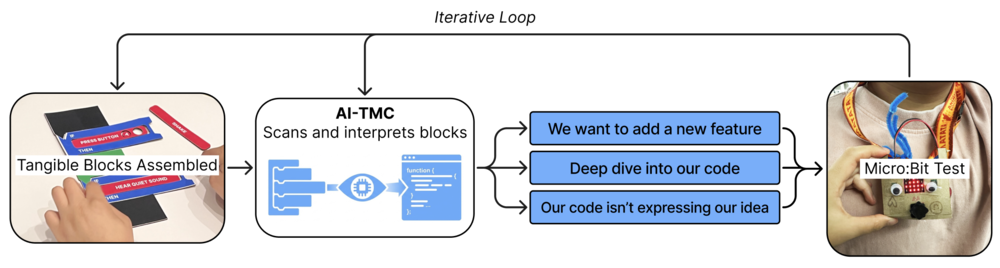
  title={Tangible-MakeCode: Bridging Physical Coding Blocks with a Web-Based Programming Interface for Collaborative and Extensible Learning},
  author={Yu, Jin and Garg, Poojita and Synn, DoangJoo and Oh, HyunJoo},
  booktitle={Proceedings of the 2025 CHI Conference on Human Factors in Computing Systems},
  year={2025},
  month={4},
  publisher={ACM},
  address={Yokohama, Japan},
  doi={10.1145/3706598.3713260},
  isbn={979-8-4007-1394-1/25/04},
  selected={true},
  website={https://www.codecraft.group/projects/t-mc},
  preview={/images/papers/yu2025tangible.png},
  featured={true},
  video={SvataWf_iqA},
  pdf={https://drive.google.com/file/d/1SwCHliR0WQOfaibA9MnRD7Ibrg_Wj3HI/view}
}
XinYu Piao, DoangJoo Synn, JooYoung Park, Jong-Kook Kim
BibTeX
@article{piao2023enabling,
  abbr={IEEE Access},
  title={Enabling large batch size training for dnn models beyond the memory limit while maintaining performance},
  author={Piao, XinYu and Synn, DoangJoo and Park, JooYoung and Kim, Jong-Kook},
  journal={IEEE Access},
  volume={11},
  pages={102981--102990},
  year={2023},
  publisher={IEEE},
  doi={10.1109/ACCESS.2023.3312572},
  pdf={https://arxiv.org/pdf/2110.12484},
  preview={/images/papers/piao2023enabling.png},
  featured={true},
  selected={true}
}
BibTeX
@inproceedings{ahn2021nips,
  abbr={NeurIPS},
  bibtex_show={false},
  title={Protopia AI: Taking on the Missing Link in AI Privacy and Data Protection},
  author={Ahn, Byung Hoon and Synn, DoangJoo and Derkani, Masih and Ebrahimi, Eiman and Esmaeilzadeh, Hadi},
  booktitle={Neural Information Processing Systems Demonstrations},
  year={2021},
  selected={true},
  organization={Neural Information Processing Systems},
  website={https://neurips.cc/virtual/2021/30633},
  pdf={https://cseweb.ucsd.edu/~bhahn221/doc/paper/neuripsd21-protopia.pdf},
  video={https://slideslive.com/38975477},
  preview={/images/papers/ahn2021nips.png},
  featured={true}
}
All publications (7 more)
MyungHoon Ryu, XinYu Piao, JooYoung Park, DoangJoo Synn, Jong-Kook Kim
Abstract
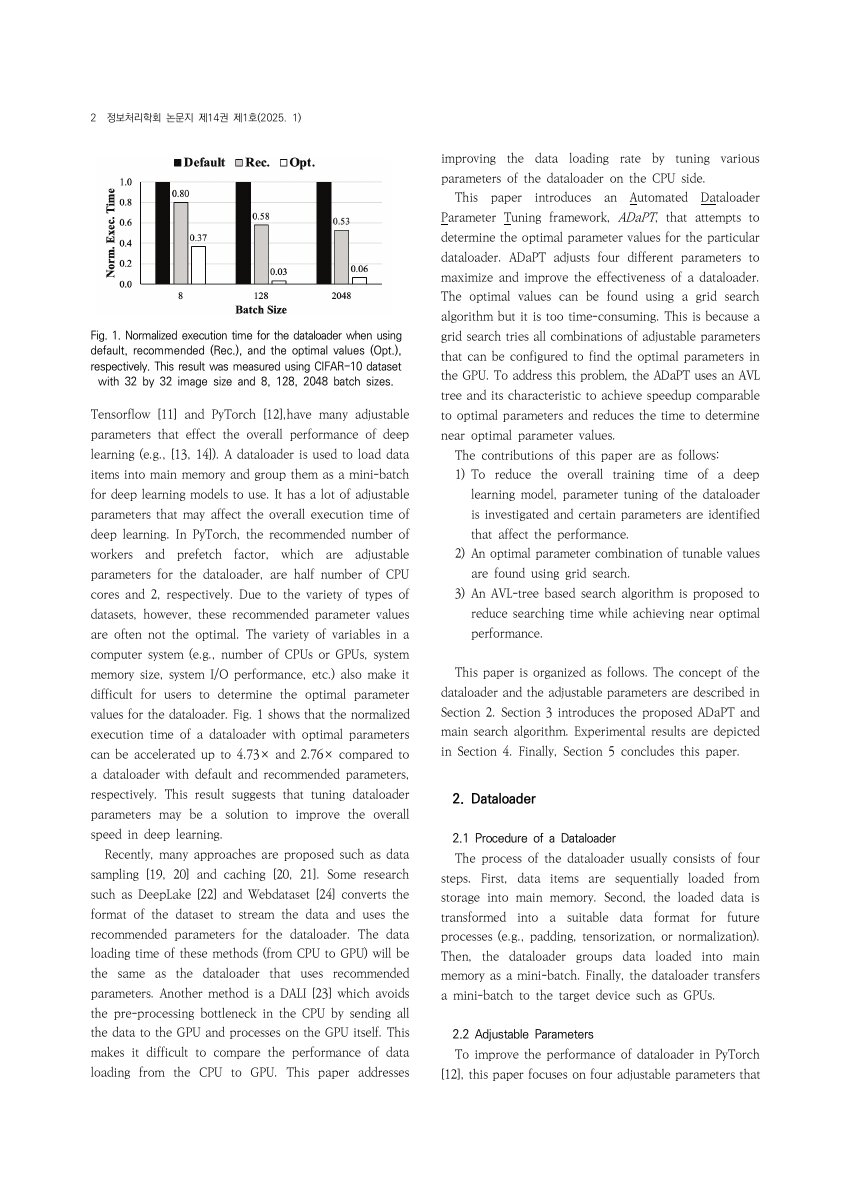
Recently deep learning has become widely used in many research fields and businesses. To improve the performance of deep learning, one of the critical challenges is to determine the optimal values of many parameters that can be adjusted. This paper focuses on the adjustable dataloader parameters that affect the overall training time and proposes an automated dataloader parameter tuning framework, called ADaPT, to determine the optimal values of the dataloader parameters. The proposed ADaPT uses the characteristic of the AVL tree and attempts to determine optimal dataloader parameters in a small amount of time to accelerate the data loading. The results show that the proposed method effectively accelerates the data loading speed compared to the default parameter values and values that are recommended by PyTorch and the speed is comparable to the optimal.
BibTeX
@article{ryu2025adapt,
  abbr={TKIPS},
  bibtex_show={false},
  title={ADaPT: An Automated Dataloader Parameter Tuning Framework using AVL Tree-based Search Algorithms},
  author={Ryu, MyungHoon and Piao, XinYu and Park, JooYoung and Synn, DoangJoo and Kim, Jong-Kook},
  journal={The Transactions of the Korea Information Processing Society},
  volume={14},
  number={1},
  pages={1--8},
  year={2025},
  month={1},
  doi={10.3745/TKIPS.2025.14.1.1},
  preview={/images/papers/ryu2025adapt.jpg},
  url={https://tkips.kips.or.kr/digital-library/101925},
  pdf={https://tkips.kips.or.kr/digital-library/manuscript/file/101925/01-CCS-24M-06-014M-%EA%B9%80%EC%A2%85%EA%B5%AD_01-08.pdf},
  selected={true},
  abstract={Recently deep learning has become widely used in many research fields and businesses. To improve the performance of deep learning, one of the critical challenges is to determine the optimal values of many parameters that can be adjusted. This paper focuses on the adjustable dataloader parameters that affect the overall training time and proposes an automated dataloader parameter tuning framework, called ADaPT, to determine the optimal values of the dataloader parameters. The proposed ADaPT uses the characteristic of the AVL tree and attempts to determine optimal dataloader parameters in a small amount of time to accelerate the data loading. The results show that the proposed method effectively accelerates the data loading speed compared to the default parameter values and values that are recommended by PyTorch and the speed is comparable to the optimal.},
  publisher={Korea Information Processing Society}
}
DoangJoo Synn, XinYu Piao, JooYoung Park, Jong-Kook Kim
Abstract
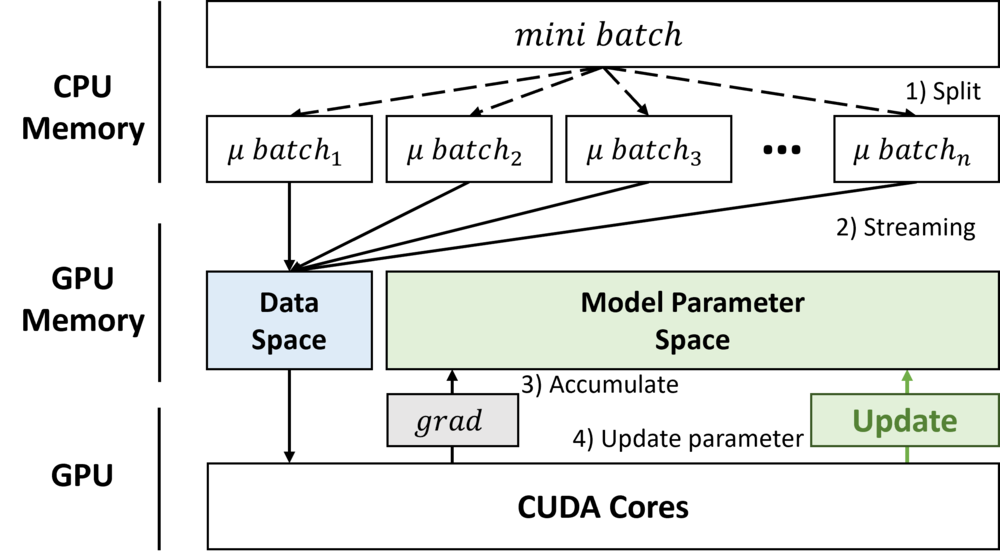
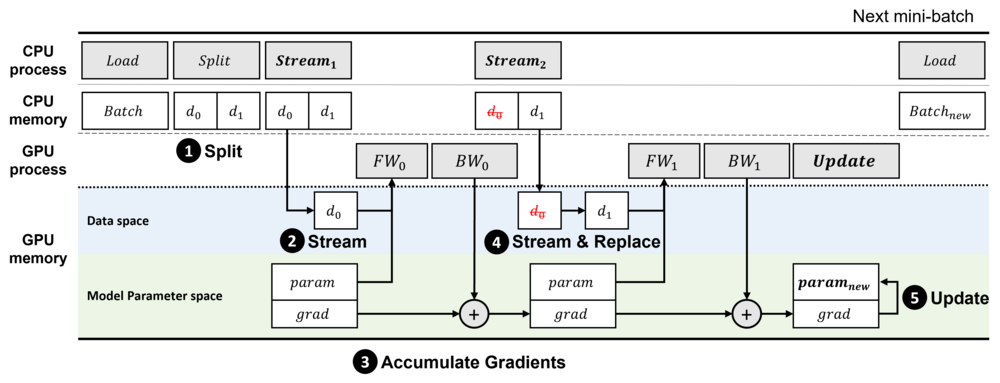
Deep learning models have been growing in size and complexity, requiring more computational resources for training. Distributed training has emerged as a solution to this challenge, allowing models to be trained across multiple devices. However, traditional distributed training approaches often face challenges related to memory constraints, especially when dealing with large batch sizes. In this paper, we propose a novel approach called Micro Batch Streaming (MBS) for distributed training of deep learning models. MBS addresses memory limitations by dividing large batches into smaller micro-batches and processing them sequentially while accumulating gradients. We evaluate our approach on various deep learning tasks and demonstrate its effectiveness in enabling distributed training with large batch sizes on memory-constrained systems. Our results show that MBS can achieve comparable or better performance than traditional distributed training methods while using less memory per device.
BibTeX
@article{synn2023distributed,
  abbr={KTSDE},
  bibtex_show={false},
  title={Distributed Training of Deep Learning Models Using Micro Batch Streaming},
  author={Synn, DoangJoo and Piao, XinYu and Park, JooYoung and Kim, Jong-Kook},
  journal={KIPS Transactions on Software and Data Engineering},
  volume={12},
  number={3},
  pages={101--108},
  year={2023},
  month={3},
  doi={10.3745/KTSDE.2023.12.3.101},
  preview={/images/papers/synn2023distributed.png},
  selected={true},
  abstract={Deep learning models have been growing in size and complexity, requiring more computational resources for training. Distributed training has emerged as a solution to this challenge, allowing models to be trained across multiple devices. However, traditional distributed training approaches often face challenges related to memory constraints, especially when dealing with large batch sizes. In this paper, we propose a novel approach called Micro Batch Streaming (MBS) for distributed training of deep learning models. MBS addresses memory limitations by dividing large batches into smaller micro-batches and processing them sequentially while accumulating gradients. We evaluate our approach on various deep learning tasks and demonstrate its effectiveness in enabling distributed training with large batch sizes on memory-constrained systems. Our results show that MBS can achieve comparable or better performance than traditional distributed training methods while using less memory per device.},
  publisher={Korea Information Processing Society}
}
Jung-Woo Han, DoangJoo Synn, Tae-Hyeong Kim, Hae-Cheon Jung, Jong-Kook Kim
BibTeX
@article{han2022fbs,
  abbr={IEEE Access},
  author={Han, Jung-Woo and Synn, DoangJoo and Kim, Tae-Hyeong and Jung, Hae-Cheon and Kim, Jong-Kook},
  journal={IEEE Access},
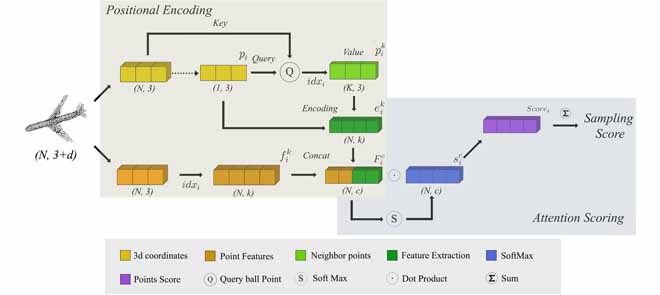
  title={Feature Based Sampling: A Fast and Robust Sampling Method for Tasks Using 3D Point Cloud},
  year={2022},
  volume={10},
  pages={58062--58070},
  month={4},
  doi={10.1109/ACCESS.2022.3178519},
  preview={/images/papers/han2022fbs.jpg},
  selected={true}
}
JooYoung Park, DoangJoo Synn, XinYu Piao, Jong-Kook Kim
BibTeX
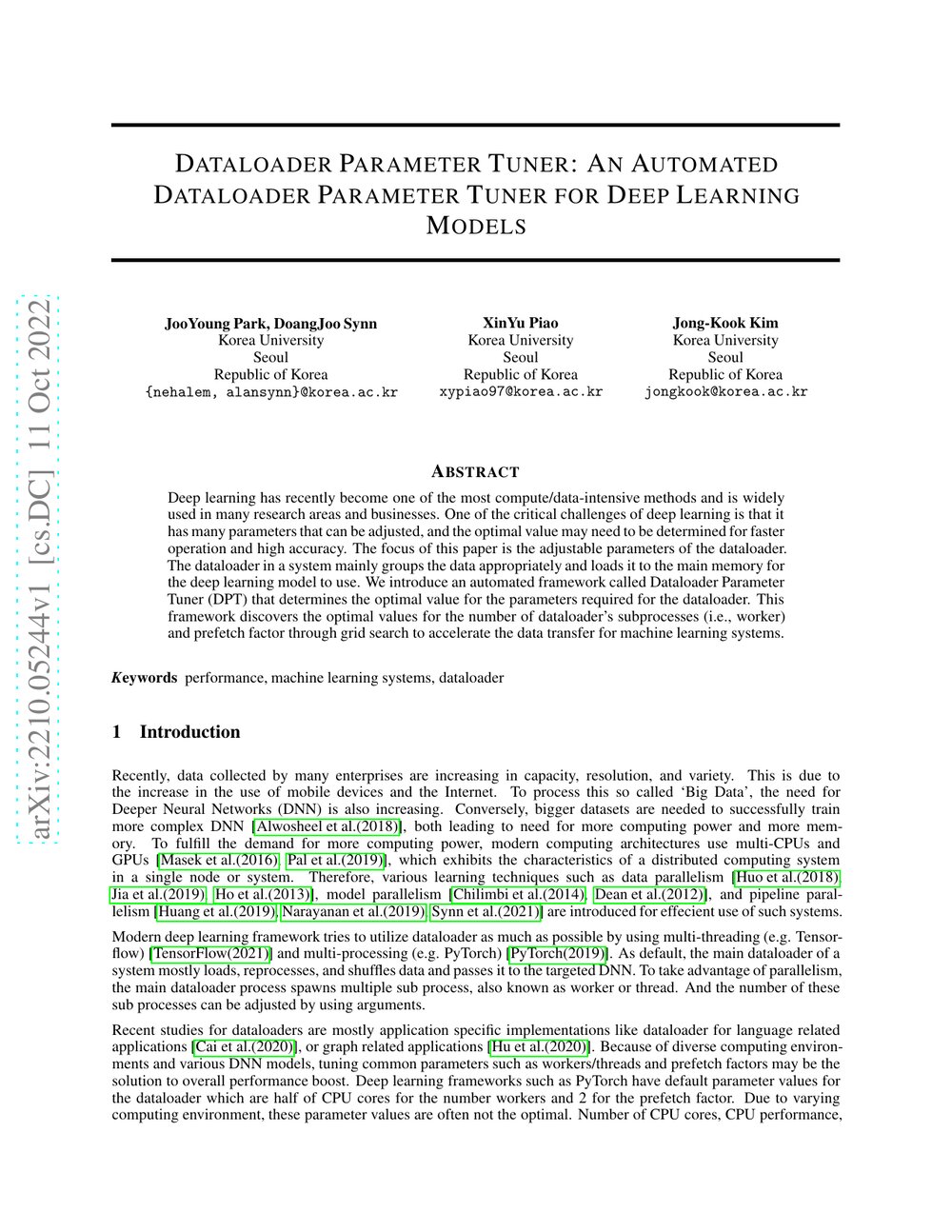
@article{park2022dataloader,
  abbr={arXiv},
  title={Dataloader Parameter Tuner: An Automated Dataloader Parameter Tuner for Deep Learning Models},
  author={Park, JooYoung and Synn, DoangJoo and Piao, XinYu and Kim, Jong-Kook},
  journal={arXiv preprint arXiv:2210.05244},
  year={2022},
  selected={false},
  url={https://arxiv.org/abs/2210.05244},
  pdf={https://arxiv.org/pdf/2210.05244},
  preview={/images/papers/park2022dataloader.jpg}
}
DoangJoo Synn, Jong-Kook Kim
Abstract
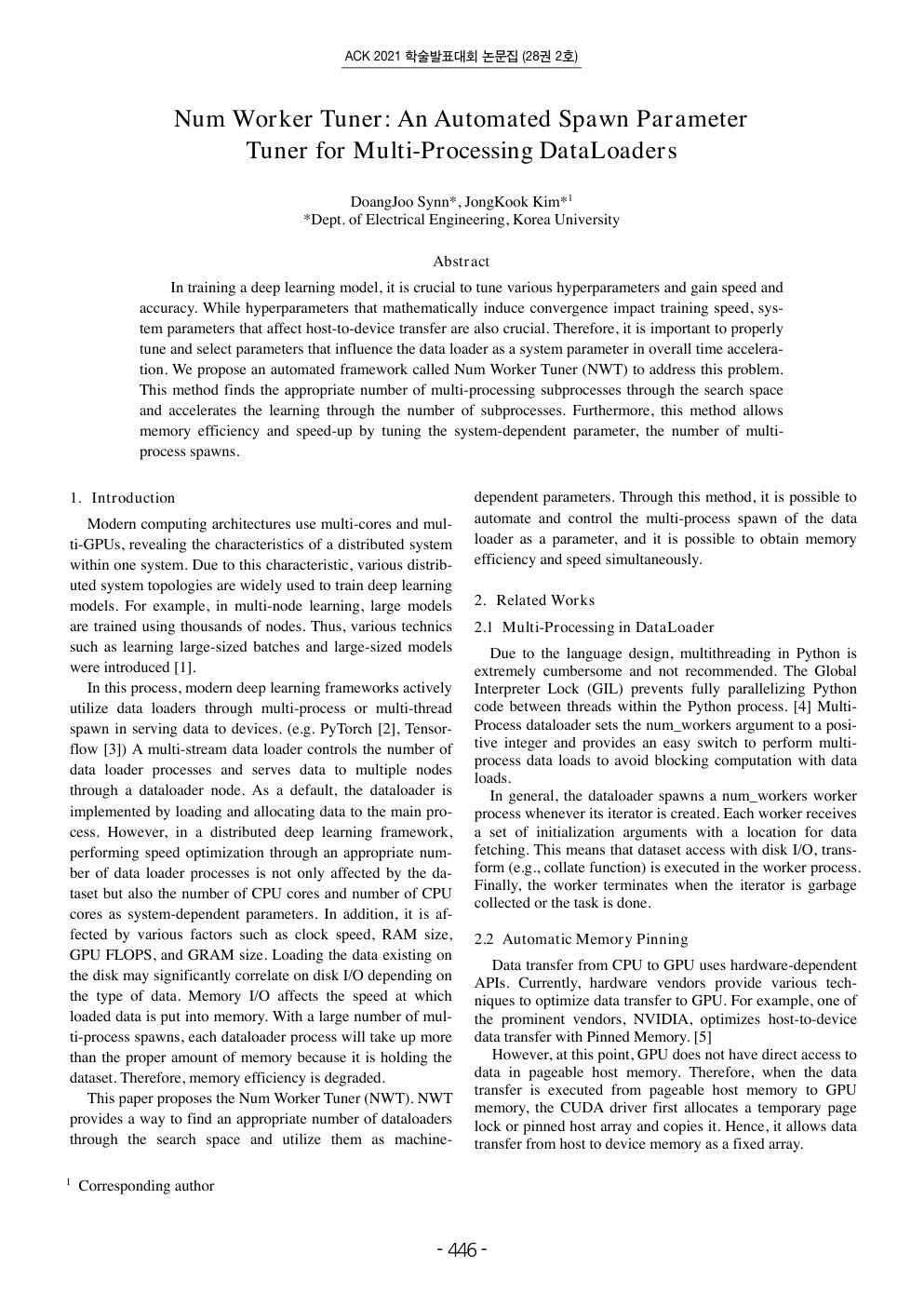
In training a deep learning model, it is crucial to tune various hyperparameters and gain speed and accuracy. Although the hyperparameters that mathematically affect the convergence significantly affect the training speed, the system parameters that affect the host-to-device data set transmission time also occupy a specific part in the overall time acceleration. Therefore, it is important to properly tune and select parameters that can affect the data loader as a system parameter in overall time acceleration. We propose an automated framework called Num Worker Tuner (NWT) to address this problem. This method finds the appropriate number of multi-processing subprocesses through the search space and accelerates the learning through the number of subprocesses. Furthermore, this method allows memory efficiency and speed-up by tuning the system-dependent parameter, the number of multi-process spawns.
BibTeX
@inproceedings{synn2021nwt,
  abbr={ACK},
  bibtex_show={false},
  title={Num Worker Tuner: An Automated Spawn Parameter Tuner for Multi-Processing DataLoaders},
  author={Synn, DoangJoo and Kim, Jong-Kook},
  booktitle={Proceedings of ACK 2021},
  url={https://koreascience.kr/article/CFKO202133649048975.page},
  pdf={https://koreascience.kr/article/CFKO202133649048975.pdf},
  doi={10.3745/PKIPS.y2021m11a.446},
  preview={/images/papers/synn2021nwt.jpg},
  year={2021},
  month={10},
  selected={true},
  abstract={In training a deep learning model, it is crucial to tune various hyperparameters and gain speed and accuracy. Although the hyperparameters that mathematically affect the convergence significantly affect the training speed, the system parameters that affect the host-to-device data set transmission time also occupy a specific part in the overall time acceleration. Therefore, it is important to properly tune and select parameters that can affect the data loader as a system parameter in overall time acceleration. We propose an automated framework called Num Worker Tuner (NWT) to address this problem. This method finds the appropriate number of multi-processing subprocesses through the search space and accelerates the learning through the number of subprocesses. Furthermore, this method allows memory efficiency and speed-up by tuning the system-dependent parameter, the number of multi-process spawns.},
  organization={Korea Information Processing Society}
}
JooYoung Park, DoangJoo Synn, Jong-Kook Kim
BibTeX
@inproceedings{park2021survey,
  abbr={KIPS},
  bibtex_show={false},
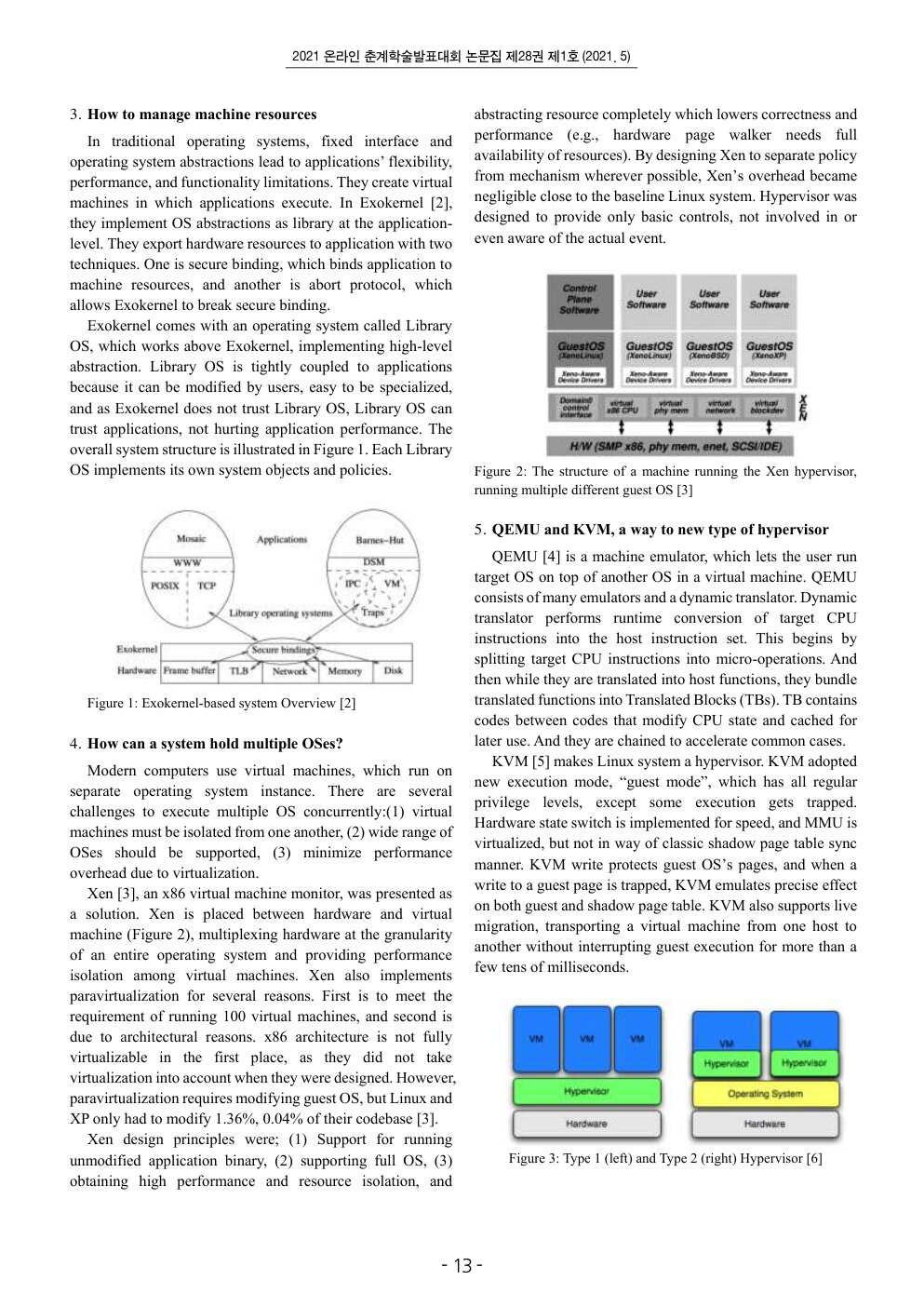
  title={A Survey on the Advancement of Virtualization Technology},
  author={Park, JooYoung and Synn, DoangJoo and Kim, Jong-Kook},
  booktitle={Proceedings of Korea Information Processing Society 2021},
  year={2021},
  month={5},
  doi={10.3745/PKIPS.y2021m05a.12},
  url={https://koreascience.kr/article/CFKO202125036216312.page},
  pdf={https://koreascience.kr/article/CFKO202125036216312.pdf},
  selected={true},
  organization={Korea Information Processing Society},
  preview={/images/papers/park2021survey.jpg}
}
DongJae Kim, DoangJoo Synn, Jong-Kook Kim
Abstract
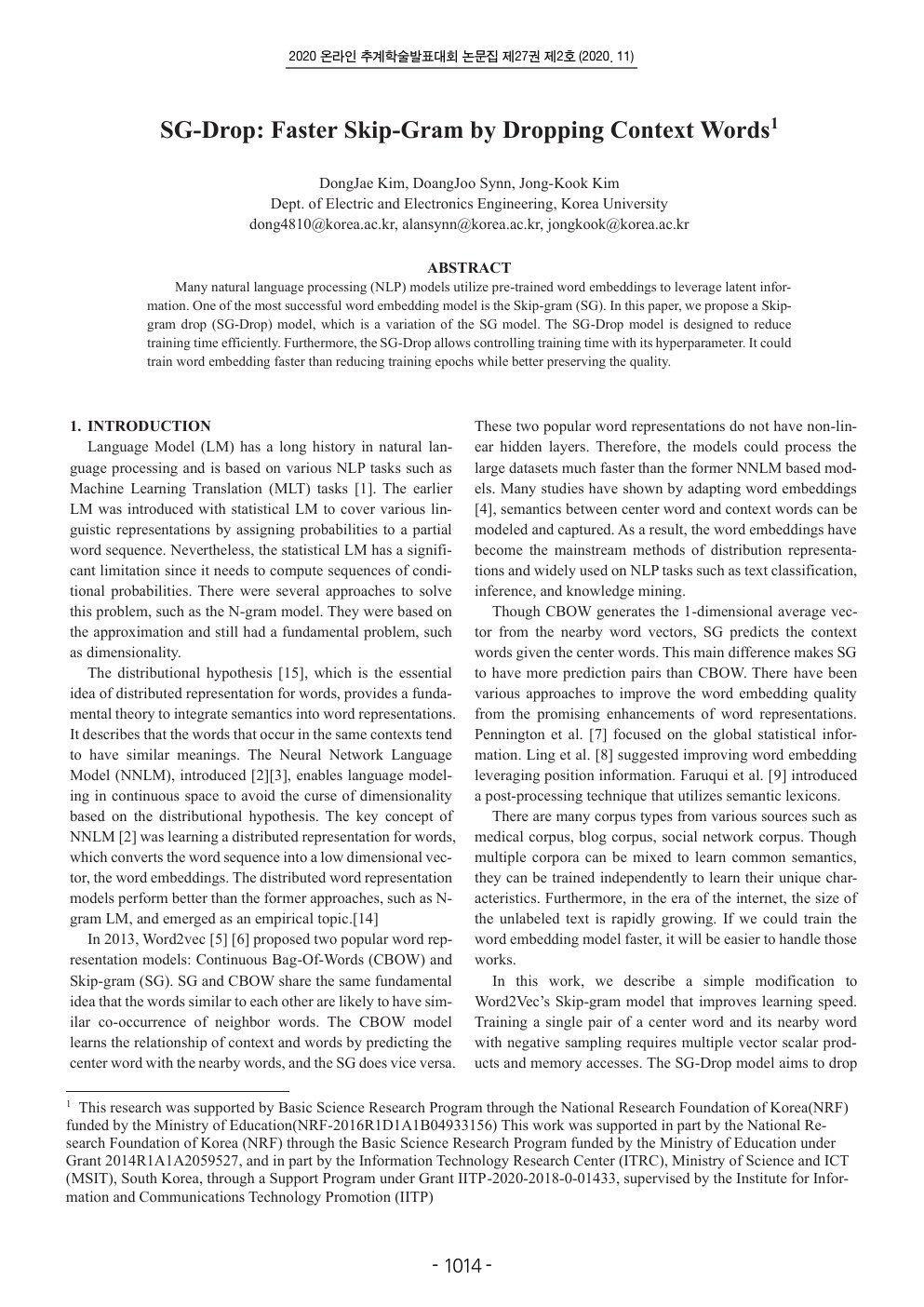
Many natural language processing (NLP) models utilize pre-trained word embeddings to leverage latent information. One of the most successful word embedding model is the Skip-gram (SG). In this paper, we propose a Skipgram drop (SG-Drop) model, which is a variation of the SG model. The SG-Drop model is designed to reduce training time efficiently. Furthermore, the SG-Drop allows controlling training time with its hyperparameter. It could train word embedding faster than reducing training epochs while better preserving the quality.
BibTeX
@article{kim2020sg,
  abbr={KIPS},
  bibtex_show={false},
  title={SG-Drop: Faster Skip-Gram by Dropping Context Words},
  author={Kim, DongJae and Synn, DoangJoo and Kim, Jong-Kook},
  journal={Proceedings of Korea Information Processing Society 2020},
  year={2020},
  month={11},
  pdf={https://web.archive.org/web/20240629161817/https://manuscriptlink-society-file.s3.amazonaws.com/kips/conference/2020fall/presentation/KIPS_C2020B0301.pdf},
  preview={/images/papers/kim2020sg.jpg},
  abstract={Many natural language processing (NLP) models utilize pre-trained word embeddings to leverage latent information. One of the most successful word embedding model is the Skip-gram (SG). In this paper, we propose a Skipgram drop (SG-Drop) model, which is a variation of the SG model. The SG-Drop model is designed to reduce training time efficiently. Furthermore, the SG-Drop allows controlling training time with its hyperparameter. It could train word embedding faster than reducing training epochs while better preserving the quality.},
  selected={true},
  publisher={Korea Information Processing Society}
}

Projects

2021 - 2022

Privacy-Preserving Deep Learning

Curated noise that safeguards inference data, plus the internal training framework and scalable workflow behind it.

2017 - 2019

Musio - A Social Robot

Embedded board and software for Musio, AKA Intelligence's social robot powered by the MUSE deep-learning engine.

Experience

  • 2024 - 2025
    PhD Research Intern, Dolby Laboratories
    Atlanta, GA, USA
    • Experience Delivery Lab, built a time-series, multimodal datastore supporting low-latency media analytics.
  • 2023
    MLOps Engineering Intern, LG Uplus Corp.
    Seoul, Korea
    • Led DeepCrunch, a model-compression library with multi-backend AI inference for efficient edge serving.
  • 2021 - 2022
    Research Scientist, Protopia AI Inc.
    Austin, TX, USA
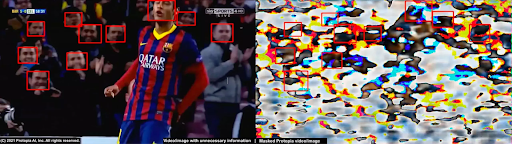
    • Built Stained-Glass, a privacy-preserving deep-learning framework enabling inference without raw-data exposure.
    • Led development and infrastructure integration (Kubernetes + GPU).
    • CEO: Dr. Ebrahimi; CTO: Prof. Esmaeilzadeh.
    • Resulted in a NeurIPS 2021 Demo publication.
  • 2020 - 2022
    Cloud Architect · AWS Educate Cloud Ambassador
    Seoul, Korea
    • Guided 4 startups to cloud-native deployments (Kubernetes, Terraform) and shipped their services.
    • Led CI/CD, observability, and cost-optimized autoscaling for social-media back-ends.
  • 2019
    Server Engineer, Flysher Inc.
    Seoul, Korea
    • Shipped back-end features for 4 social-game titles; one reached global top-10 on Facebook.
    • Built an ETL → Redshift analytics pipeline driving data-informed feature rollout.
  • 2017 - 2019
    System Engineer, AKA Intelligence (Musio)
    Seoul, Korea
    • Designed embedded Linux boards & firmware for the social robot Musio.
    • Coordinated HW-SW integration and production QA with overseas ODMs.

Education

  • 2022 -
    Georgia Tech, Ph.D. in Computer Science
    Atlanta, GA, USA
  • 2020 - 2022
    Korea University, M.Eng. in ECE
    Seoul, Korea
    • Advised by Prof. Jong-Kook Kim
    • GPA: 4.25 (4.5 scale)
    • Thesis: On Efficient Data Delivery for Machine Learning Systems
  • 2012 - 2020
    Korea University, B.Eng. in EE
    Seoul, Korea
    • GPA: 3.56 (4.5 scale)
    • On leave from 2016 Spring to 2019 Spring to serve alternative military service

Teaching

  • 2024 -
    Head TA, CS 4496/7496 Computer Animation
  • 2021 - 2022
    Lecturer, Korea University
    • Taught Java for 10+ undergraduate students.
  • 2021
    Teaching Assistant, Korea University
    • Digital System Design
    • Data Structure and Algorithm
  • 2012 - 2014
    Lecturer, KAIST Engineering School
    • Created comprehensive coding education programs in collaboration with the Ministry of Science and ICT of South Korea.
    • Developed 20+ hardware and software development curricula for programming education.
    • Emphasized hands-on projects utilizing Arduino to teach the principles of mobile and ubiquitous computing.
    • Guided high-school and college-level students in exploring the third generation of computing through practical projects addressing real-world problems.

Activities & Service

  • 2023 - 2024
    Georgia Tech Korean Student Association
    • President of Korean Students in the College of Computing.
  • 2014 - 2019
    Hardware & Software Community, Korea University
    • President.
    • Grew the engineering community at Korea University from 10 members to over 200 active participants, spanning both hardware and software specialties.
  • 2015 - 2016
    TEDxKoreaUniversity, Korea University
    • Founder & Chief Organizer.
    • Organized a TEDx event with 200 guests, 7 speakers, 47 team members, and a $4k budget. Responsibilities included fundraising, sponsorships, editorial decisions, communication planning, and production & media.

Honors & Awards

Fellowships
Awards
  • Dean's List, Spring 2012 & Fall 2020, Electrical Engineering

  • Prize Winner, Creative Challenge Program @ Korea Univ. CTL (2016)

  • Prize Winner, Creative Challenge Program @ Korea Univ. CTL (2015)

Contact

I'm always up for a coffee chat about research, collaborations, internships, or wherever graphics meets design. Say hi anytime.